
Zimbabwe: Nurses Union Double its Membership to 9,000 and is Strengthening Bargaining Power Across Hospitals
May 27, 2026
- Read this in:
- en
Zimbabwe Nurses Association (ZINA) has grown from a small group of nurses organising under repression into one of the country’s strongest health worker unions, with more than 9,000 members across Zimbabwe’s hospitals and clinics. Now, with support from PSI, the union is commencing training leaders across districts and rural communities to build even greater worker power.
For years, nurses had organised under difficult conditions in Zimbabwe. In 2010, ZINA had just 1,500 members. That was the moment nurses like Chiedza Mukwekwezeke joined the union ZINA. Shortly before then, she was part of a group of 12 student nurses who organised a demonstration over poor working conditions of health workers. Authorities suspended her ability to practice after graduation.
After months of court and administrative hearings, Chiedza was finally cleared and returned to work as an anaesthetic nurse in Manicaland province. Two years later, ZINA organisers visited her workplace. Enoch Dongo, the union president, encouraged her to become active in the union and take up leadership responsibilities. And over time, she rose to become the union’s Secretary General.
Chiedza Mukwekwezeke Secretary General, ZINA

Supervisors still pressure us to continue even when we know it puts patients at risk
Over the years, ZINA leaders travelled across Zimbabwe visiting workplaces, speaking directly with nurses and building trust inside hospitals and clinics. The union leadership visited all 10 provinces, meeting nurses face to face and listening to their concerns.
In one workplace meeting in Chivi, 14 nurses joined the union in a single day. But the visit achieved more than that. Union leaders updated workers on negotiations with government, identified new workplace leaders and strengthened confidence among nurses who often felt forgotten in remote areas. That organising model transformed the union.
Chiedza says her motivation is not only wages. But the need to improve these kinds of experiences that nurses face in different health facilities. “Sometimes the supplies we need to safely put a patient under anaesthesia are not available, but supervisors still pressure us to continue even when we know it puts patients at risk and goes against our training.” she explained.
Nurse Chivi District Hospital, Masvingo province

I didn’t want to be alone. I felt protected and supported when I became part of the union
Across Zimbabwe, there are many nurses sharing the same fears, frustrations and isolation. In Chivi District Hospital in Masvingo province, a young nurse described the emotional burden health workers carry every day when she said: “You think to yourself maybe you could have saved that patient if you had the supplies,” she said. When asked why she joined ZINA, her answer was simple. “I didn’t want to be alone. And I felt protected and supported when I became part of the union.” That feeling of collective protection became one of the union’s strongest organising tools.
Enoch Dongo President, ZINA

The moment we increased our membership from 7,500 to more than 9,000, we witnessed more positive engagement with the government
In 2018, they went on strike even though workers did not yet have legal protection for industrial action. But in 2022, nurses had secured legal protections around strike action, and membership had crossed 4,000. Today, more than 9,000 nurses belong to the union. Enoch Dongo, ZINA President noted said: “The moment we increased our membership from 7,500 to more than 9,000, we witnessed more positive engagement with the government.” This growth changed how government responded to the union.
Months ago, the union organised another nationwide strike over wages and working conditions. Dongo said: "In April, we called for an industrial action. With those numbers joining the action, it really caused concern to the government. When we negotiate, government wants to know how many members we are representing,”
The union also noted that one of the biggest turning points that helped them to grow from 7500 to 9,000 came through support from their work with the Norwegian Nurses Organisation (NNO), which helped ZINA strengthen its internal systems and accountability structures. Before the partnership, the union did not have a full-time accountant or proper systems to manage finances and track membership contributions.
Dongo said: “When they came in, we hired a full-time accountant at our office. This increased our transparency to our members in terms of their contributions.” The union also built membership databases province by province. “We now know how many members we have from each and every province,” Dongo said. That transparency strengthened confidence among nurses and encouraged more workers to join. “This has made them feel like they want to belong to ZINA,” he added.
There are approximately 20,000 nurses in Zimbabwe, and ZINA wants to grow to 15,000 members in near future. To get there, PSI is supporting the union to train local leaders in organising, advocacy and workplace representation so that union presence is felt in every district, hospital and remote community. “There is power in knowledge, if they get the information and the skills on how to approach members and represent them, I am very positive that we will grow even beyond our target.” Dongo emphasised.
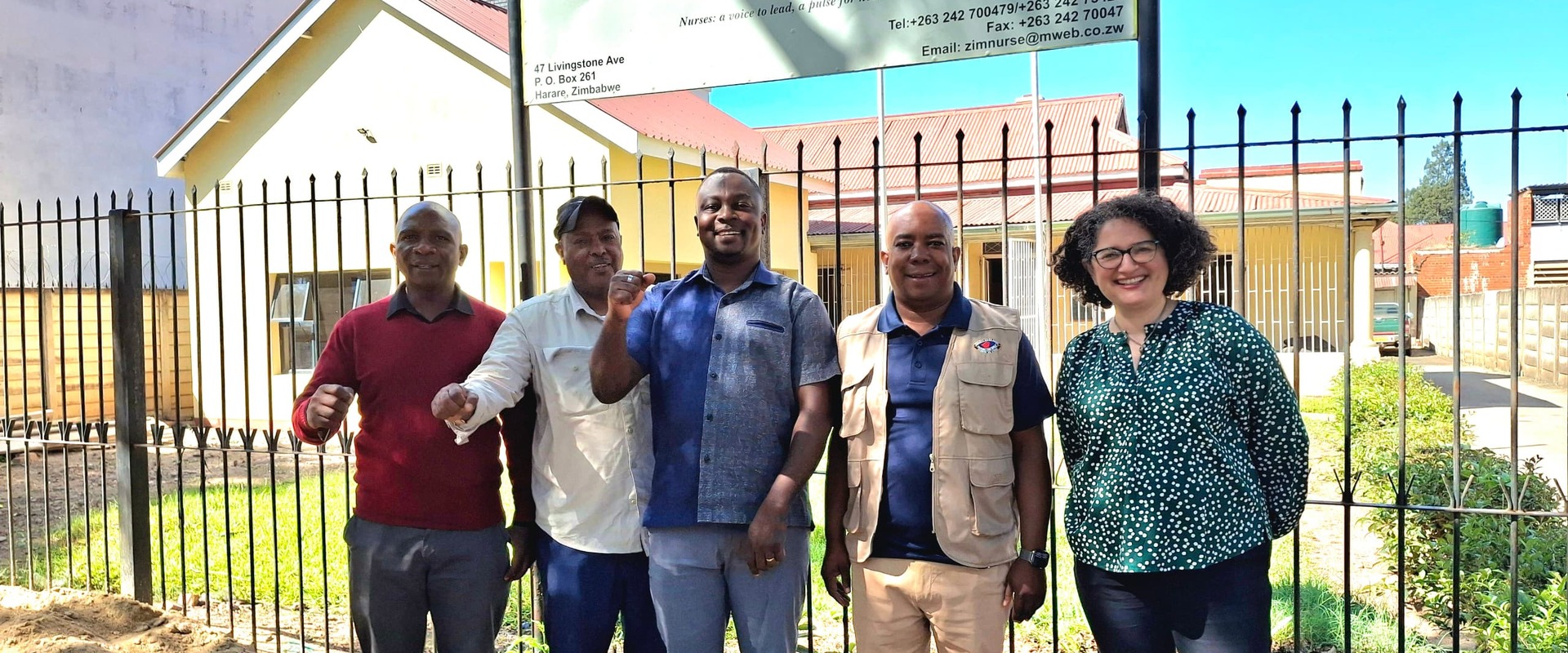
PSI Organising Delegation Visit ZINA
In May, PSI organised a strategy workshop in Zimbabwe to assess the union’s growth and discuss the next phase of its organising. During the these engagements, 45 student nurses registered to become members of ZINA ahead of their graduation. With support from FNV, a PSI affiliate of, the union is commencing training leaders across districts and rural communities to build even greater worker power.
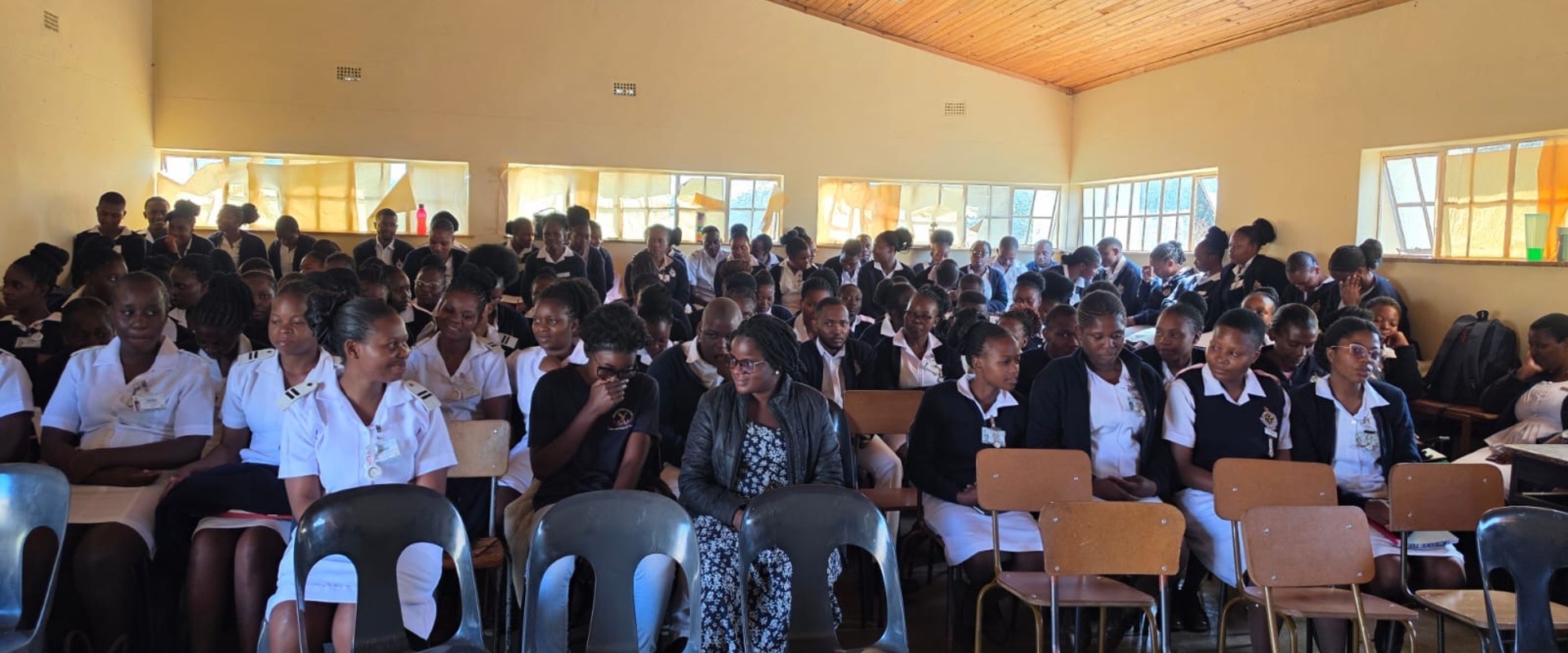
A cross section of Student Nurses ZINA engaged in May

ZINA national and provincial leaders participating in the strategy session with PSI team