
Voices of Women Union Leaders at UNCSW70
Mar 17, 2026
Four leaders of PSI unions attending UNCSW explain why care is a human right. Drawing from recent discussions around the Agreed Conclusions, they offer compelling insights into what is at stake—and what must change.
Across the globe, women union leaders are making a powerful and unified case: care must be recognised not as a commodity, but as a fundamental human right. At the heart of this movement are trade unions, transforming international commitments like the UN Commission on the Status of Women (UNCSW) Agreed Conclusions into concrete action for workers and communities.
Trade Unions Driving Change in the UK
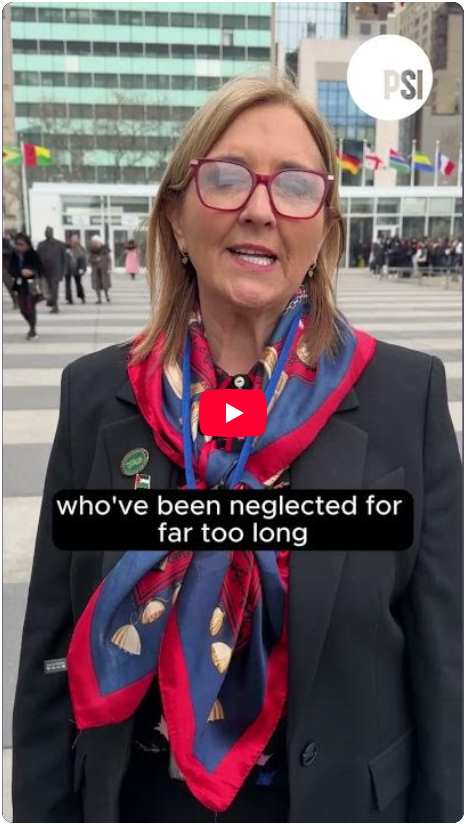
Catherine McKenna of UNISON highlights the decisive role her union is playing in pushing social care up the political agenda. UNISON has been actively lobbying the UK government to make social care its number one priority—ensuring promises translate into real, accessible services for all.
But UNISON’s work goes beyond advocacy. The union is organising care workers, campaigning for fair pay and conditions, and challenging the commodification of care that has eroded standards across the sector. By working directly with government while maintaining pressure from the ground, UNISON is demonstrating how unions can both shape policy and hold power to account.
Their objective is clear: a universal care system built on rights, not profit—and a workforce recognised as skilled professionals, not undervalued labour.
Turning Global Commitments into Workplace Gains
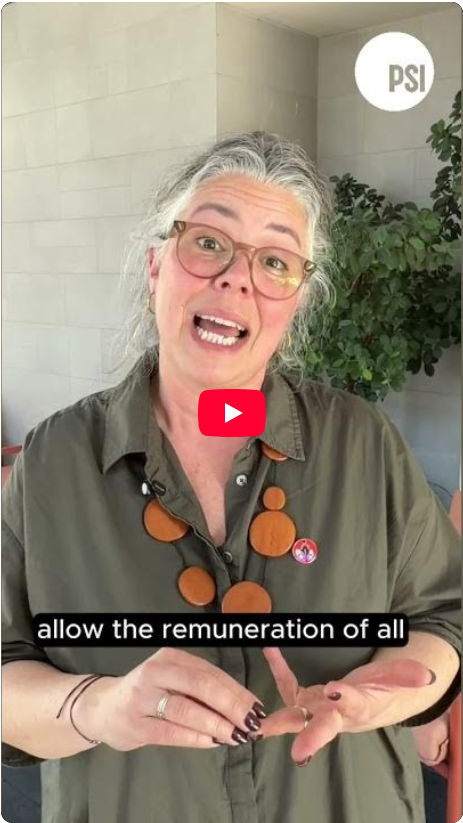
In Quebec, Nadine Bédard-St-Pierre of CSQ shows how unions are using the UNCSW Agreed Conclusions as a practical tool in negotiations and social dialogue. For CSQ, these agreements strengthen their hand at the bargaining table and provide a framework to demand systemic change.
The union is leveraging this to push for pay equity, proper compensation for all hours worked, stronger parental and family leave, and more flexible working arrangements. At the same time, CSQ is leading efforts to make women’s invisible labour visible—mobilising around an “ethics of care” that places value on the relational and emotional skills at the core of care work.
This is union action at its most effective: connecting international standards to everyday workplace realities, while pushing governments to properly fund public services.
Resisting the Marketisation of Care
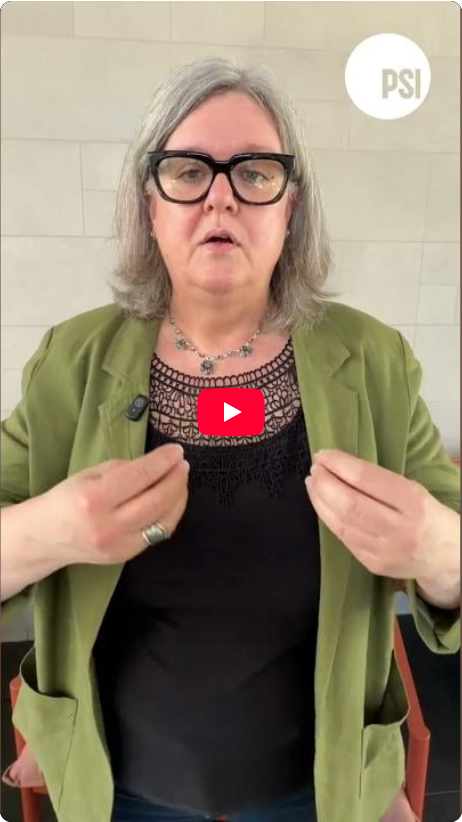
Françoise Ramel of FIQ underscores the crucial role unions play in resisting the shift towards treating care as an economic commodity. FIQ is actively campaigning against policies that introduce market logic into healthcare, warning that this leads directly to inequality and exclusion.
Through advocacy and public engagement, the union is challenging privatisation and defending the principle that care is a necessity, not a product. FIQ also highlights how the commodification of care obscures the vast amount of unpaid work carried out by women—work that remains essential yet unrecognised.
Their demand is unequivocal: care must be enshrined as a human right, guaranteed through strong, publicly funded systems.
Defending Public Services from Privatisation
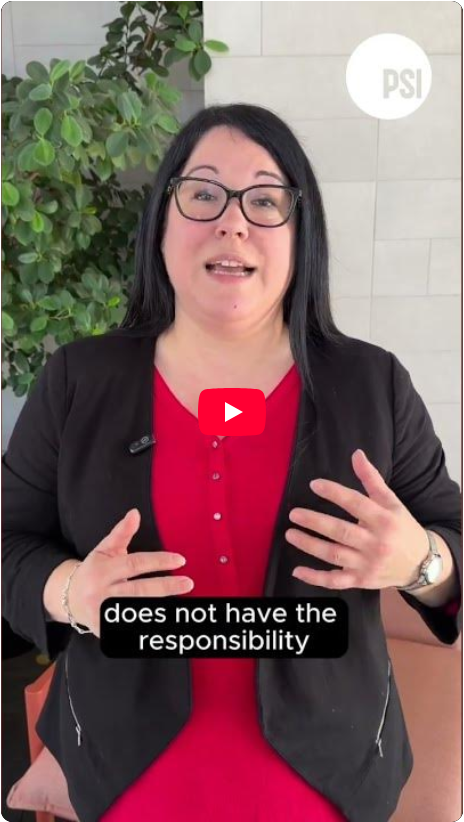
Sophie Ferguson of SPGQ illustrates how unions act as a frontline defence against the erosion of public services. In Quebec, SPGQ has been vocal in opposing job cuts and austerity measures that weaken healthcare systems.
By exposing the real consequences—loss of expertise, reduced access, and declining quality—the union is holding governments accountable for decisions that prioritise short-term savins over long-term public good. Their work highlights a critical truth: when public systems are undermined, privatisation follows, often at higher cost and lower quality for the public.
A Collective Movement for the Right to Care
Across different regions, these unions share a common strategy: organise workers, influence policy, and mobilise society to reclaim care as a public good. They are not only improving conditions for their members, but also reshaping how care is valued and delivered.
The UNCSW Agreed Conclusions provide an important framework—but it is the sustained work of trade unions that brings these principles to life. Through bargaining, campaigning, and social dialogue, unions are turning commitments into rights.
Their message is clear and urgent: care is not a commodity—it is a human right. And it is through strong, collective trade union action that this right will be secured for everyone.
Because at its best, care does more than support individuals—it sustains societies. And trade unions are leading the fight to ensure it is protected, valued, and universally accessible.