Peru: national organising campaign adds nearly 3,000 new members in the health sector
May 7, 2026
FECUT has been able to recruit almost 3,000 new affiliates since 2024 as a result of a national organising drive following the participation of its leaders in the Organising for Power training programme, developed in partnership with PSI.
The experience of the Public Services International (PSI) affiliate in Peru demonstrates how strategic union leadership training can translate into concrete organisational growth, strengthening workers' representation in one of the most pressured sectors in the country.
The Federation of Health Workers of Peru (FED-CUT) has a presence throughout the country through 149 union bases. From these spaces, a growth strategy was deployed that made it possible to identify new leaders, organise local teams and bring the union closer to workers who were not yet affiliated.
For years, health workers in the Andean country have been facing profound difficulties marked by the underfunding of the public system, staff shortages, work overload and precarious forms of contracting. In addition, political instability has had a direct impact on the state's capacity to respond to the needs of the population and to guarantee decent conditions for those who support hospitals, health centres and essential services.
However, in 2025, thousands of public workers have guaranteed improvements in employment benefits with the Centralised Collective Bargaining Agreement after four years of the Collective Bargaining Law in the Public Sector in Peru. Among the measures approved, the Transitional Extraordinary Benefit to the consolidated lump sum and the implementation of compensation for time of service for workers in the Administrative Service Contract (CAS) regime, who are today the majority of public workers in the country and have almost no rights or benefits of other public workers in other regimes, stand out.
Faced with this scenario, in early 2024 FECUT leaders participated in the Organizing for Power training, an international initiative aimed at strengthening union capacities to build power from the grassroots, expand membership and develop sustained organising campaigns in the workplace. Following this training process, in May this year the federation launched the first phase of a national organising campaign based on planning, territorial leadership, strategic communication and grassroots participation.
Strategies Used in the First Phase
Identification of leaders and activists in the 149 national bases.
Creation of communication materials (leaflets) explaining who FECUT is, why join and the benefits.
Production of videos to raise awareness among non-affiliated comrades.
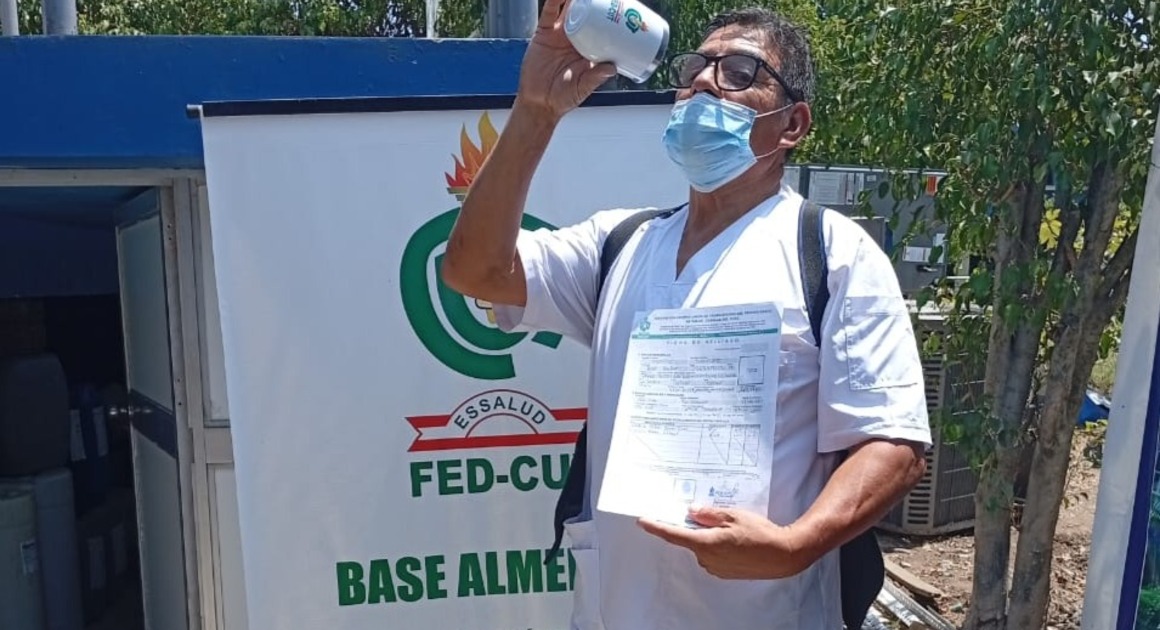
Intensive use of social networks: publication of photos of new affiliates with promotional materials (glasses with logo)
Networking strategy: leaders convince groups who in turn attract more people
Structured conversations with identified leaders

One of the main contributions of Organising for Power was the adoption of methodologies aimed at direct conversation with workers, mapping workplaces, identifying natural referents and building permanent campaigns rather than isolated actions.
"Although it is true that we have 149 national bases, not all of them are activists, but organic leaders. However, within the organisation or at the grassroots, we have found that we have many activists and the qualities of the activists have allowed us to identify them and, together with them, to implement the strategy of this first stage of unionisation", says Norma Gómez Yalico, FEDCUT's Secretary of Economy and Finance, who has been identified as an organisational leader.
From that learning, FECUT promoted internal trainings for activists, produced explanatory materials on the importance of affiliation, developed audiovisual content and used social networks to disseminate testimonies, union achievements and stories of new members.
"So we started with this, identifying our activists and developing a communication strategy. First we produced materials, such as the triptych, and in it we included who we are, why we are affiliated to FECUT, what the benefits of being affiliated are; then we recorded videos in which we worked with the grassroots to raise awareness among our colleagues who were not yet affiliated and to take advantage of the opportunity to join the union," says Yalico.

Between May 2024 and December 2025, the organisation grew from 20,969 to 23,497 members, adding 2,528 new members. Although the initial goal was to reach 5,000 new members, the federation considers the result highly positive given the difficult labour and political conditions in the country.
Nancy Segura de la Cruz, a worker at the Grau Emergency Hospital with 25 years of service to patients and a member of FED-CUT, says in the video produced for the campaign that it is good to be part of the union "because there has always been a constant struggle, we have always tried to achieve the objectives set and it has always been done with the aim that everything should be equal, and that, in addition, many things have been achieved, such as "the increase in uniforms, there has been an update in the payment of guards and also the extraordinary bonuses that I think all of us have been able to confirm". She ends her video by inviting her colleagues to join FED-CUT.
Nancy Segura de la Cruz Worker at the Grau Emergency Hospital and member of FED-CUT

There has always been a constant struggle, we have always tried to achieve the objectives set and we have always done so with the aim that everything should be equal, whether you are a professional nurse or a technician.
In January 2026, a second phase of the campaign began, with the main focus on young workers hired under CAS contracts. Despite the departure of 444 members due to a mandatory retirement age of 70, the federation quickly resumed growth and reached 23,391 members in April of the same year, adding more than 100 new members.
"Young workers on informal contracts is our population at the moment, we focus on young people to be able to unionise," explains Yalico.
Second Stage of Organising (January 2026 - Present)
In January 2026, 444 members left due to a law requiring retirement at age 70.
Adjusted membership: 23,053 members
Current membership (April 2026): 23,391 members
New members in second phase (4 months): 106 people
Target population: young workers on CAS (informal) contracts in larger national hospitals
Based on the lessons learned, the organisation replicated the Organising for Power training internally among general secretariats and local leaders, adapting organising tools to the reality of each union base. It also promoted creative outreach actions, podcasts with testimonials from affiliates and new digital strategies.
"Now we move to the second phase of organising, where we work with all the general secretaries, we apply what we learned in the Organising for Power training, and each of them worked with their own base, but with new agreed strategies. They always carry a leaflet with them for organising, because workers still don't know their rights", concludes the FEDCUT secretary.
In addition to the growth in membership, FECUT developed campaigns to strengthen the union's permanence in a context where multiple organisations coexist within the sector. The federation stresses that many people decided to stay affiliated because they value the gains achieved through collective bargaining, wage improvements and concrete benefits for the membership.