Pacific Health Brain Drain: Australia & NZ Poach Nurses, Leave Islands to Collapse
Dec 10, 2025
- Read this in:
- en
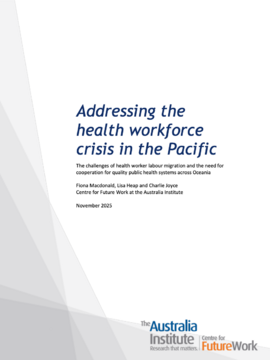
A new report from PSI and the Centre for Future Work at The Australia Institute warns that unmanaged labour migration from Pacific Island nations to Australia and Aotearoa New Zealand is draining already fragile health systems and pushing the region towards a serious health workforce crisis.
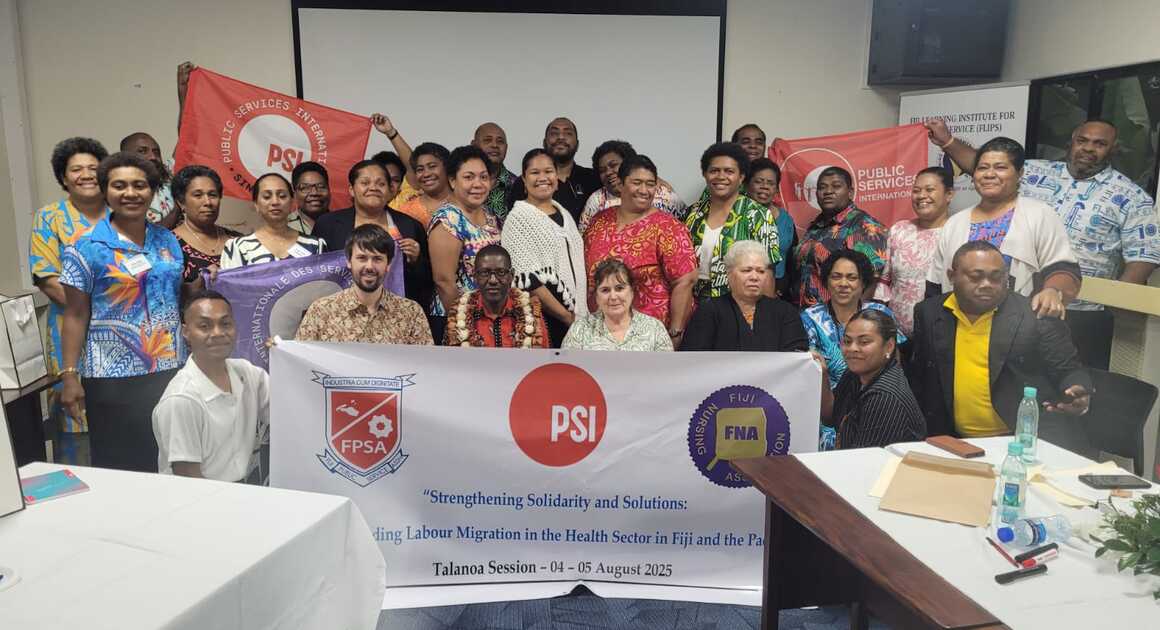
Consultations with health unions in Fiji, Papua New Guinea, Samoa, Solomon Islands, Vanuatu, Australia and New Zealand reveal how nurses and other skilled health workers are leaving underfunded public systems at home, only to be deskilled, underpaid and exploited in destination countries. Much of the research used Talanoa-style consultations—open, relational conversations rooted in Pacific traditions—allowing workers to speak freely about their lives, fears and hopes.
This is the first research to use a culturally appropriate approach to listen to health workers across Pacific Islands. They stressed their commitment to serving their communities through public health care, but also described enormous pressures, with labour migration worsening the workforce crisis. Through their unions, they are ready to be part of the solution.
Video
Migration of nurses from Fiji to countries like Australia is leading to a health crisis back home. Even those who migrate, have to fight for their rights. Trade unions from both countries, who are affiliated to PSI, are coming together to fight for better health systems in Fiji and ensure workers' rights in both the countries.
Why are the Nightingales Flying?
“As the report outlines, health unions and stakeholders across the Pacific have expressed growing concern that the increasing migration of health workers to Australia and New Zealand is depleting our already limited human resources for health. This trend poses a threat to the sustainability and resilience of our national health systems, which are already under significant pressure,” said Dr. Paul Popora Bosawai, Honourable Minister for Health and Medical Services, Solomon Islands.
The report documents that poor pay, lack of career progression, unsafe working conditions and weak staffing in Pacific health systems are driving workers to migrate. But once in Australia or New Zealand, many end up in low-paid roles below their skill level, while hospitals and clinics back home struggle to keep doors open.
In Australia, the report documents concerning patterns of exploitation, particularly in care work sectors where migrant workers constitute a significant portion of the workforce. Research findings indicate that temporary migrant workers, including those on Working Holiday Maker visas and Pacific seasonal worker programmes, frequently experience underpayment, excessive working hours, and substandard accommodation. The report highlights cases where workers have been paid well below minimum wage, sometimes receiving as little as half the legally mandated rate, while facing threats of deportation if they complain.

Michael Whaites, Assistant General Secretary of the NSW Nurses and Midwives Association, said: “Workers have a right to cross borders in the pursuit of better wages, working conditions and career progression, and they must be able to do so free from exploitation. Migrant workers are systematically underpaid and overworked, and the current system makes them too afraid to speak up. As demonstrated by this report, exploitation is occurring through Pacific Australia Labour Mobility (PALM) and skilled migrant pathways, and we’re seeing it on a massive scale, hidden in plain sight. The impact on the Pacific Islands has been severe. They are paying a premium price for our healthcare workforce shortages whilst struggling with their own crises. The federal government must take stronger action to stop the exploitation of workers arriving in Australia and must act in reciprocity towards the Pacific Islands through greater funding for healthcare and worker training.”
PSI has produced a video that outlines these problems and shows how unions across borders are coming together to defend migrant workers’ rights. Watch the video here.
“Pacific health systems are being hollowed out to prop up the care economies of richer neighbours. This is leading to a workforce crisis in Pacific Island health systems which are on the brink.” said Tom Reddington, Sub-regional Secretary, PSI-Oceania. “Australia must act and use its aid program to support development of quality public health systems. Health unions must be engaged to ensure recognition and respect for the sector."
The report exposes the role of recruitment agencies and labour hire intermediaries in driving a model that works for employers—but not for workers nor public health objective in Pacific Island countries. Many migrant workers incur heavy debts to recruiters, are misled about the nature of their jobs, wages or locations, and discover on arrival that their skills will not be recognised. The report highlights systematic problems in destination countries, including wage theft, unsafe work, pressure to accept poor conditions and fear of speaking out because visa status is tied to the employer.
“Because visas are often tied to a single employer or intermediary, workers who challenge unjust treatment, risk losing both their job and their right to stay,” stated Filomena Talawadua, General Secretary of the Fiji Nursing Association. “We’ve seen firsthand the exploitation that migrant workers face but are afraid to speak up because of the fear of losing their jobs or visa status.” She added, “Experienced workers are the ones who usually migrate, leaving health systems in source countries with fewer senior staff and juniors without proper mentors.”
Fiona McDonald from the Centre for Future Work, who co-authored the study, stressed that migration policy cannot be separated from under-investment in Pacific health systems: “Our research shows that if Australia and New Zealand keep recruiting from health systems that are already stretched to breaking point—without investing back in training, staffing and decent work in the Pacific—they are effectively offloading their care crisis onto their neighbours. That is not sustainable, and it is not just.”
The report calls for urgent, coordinated reforms across the region, including developing labour and migration agreements through genuine social dialogue with health and care workers’ unions; ensuring participation of Public Services International in reviewing these agreements; strictly regulating recruitment and labour hire agencies; creating safe, independent channels for workers to report unjust practices without risking their visas; removing barriers to union membership and collective bargaining and funding quality public health systems in the Pacific Islands.
“I believe that this report will stimulate important discussions and policy responses across the Pacific. If we fail to act early, we risk losing even more of our skilled health professionals to external labour markets, therefore depriving the health needs and demand of our people. We are committed to working closely with our national and regional partners—including trade unions, training institutions, and development partners—to ensure that we maintain adequate staffing levels and sustain quality health services for our people,” noted Honourable Minister Dr. Paul Popora Bosawai.
The report is available at: https://psishort.link/MigrationReport
For media inquiries, kindly contact:
Jyotsna Singh,
Communications Consultant, PSI Asia Pacific
[email protected] | +91 9999332811
Kelera Rokomatanimoce,
Pacific Islands Project Coordinator, PSI Oceania
[email protected] | +6798402826